
Share Market
Get the latest share market news, stock updates, market trends and insights. Stay informed about Indian stock market movements, shares and important financial developments.
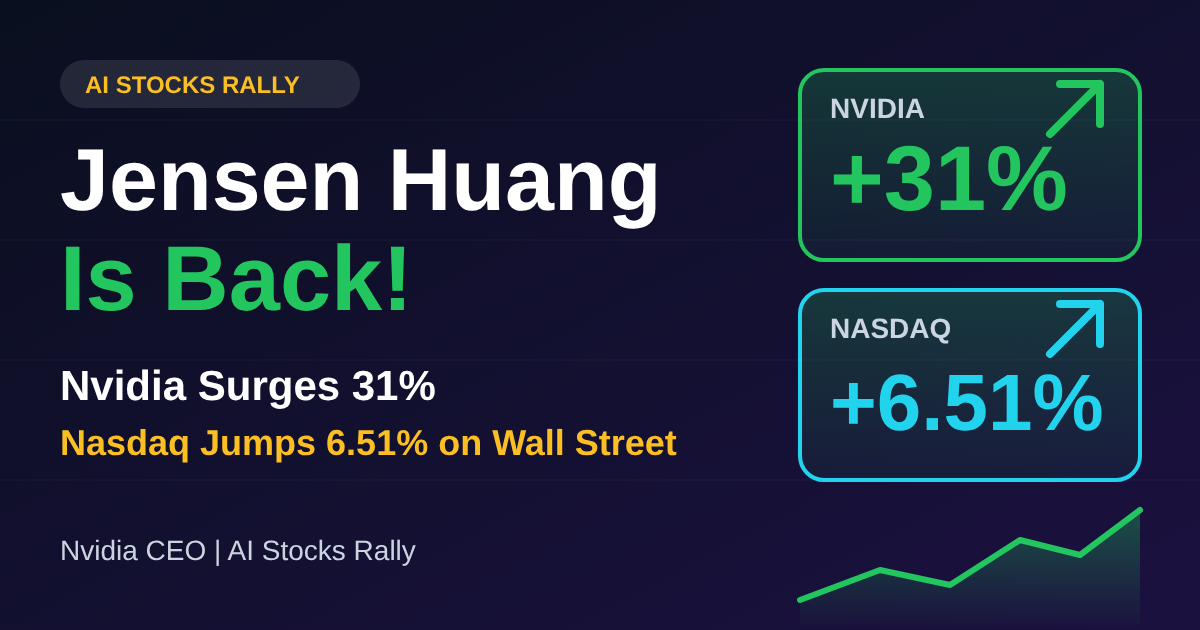
Nvidia CEO Jensen Huang Is Back: AI Stocks Rally, Nvidia Surges 31% as Nasdaq Jumps 6.51%
The global technology sector witnessed a dramatic turnaround on Monday, November 23, 2026, as Nvidia CEO Jensen Huang returned to the company's leadership, triggering a powerful rally across artificial intelligence (AI) and semiconductor stocks.
5 min read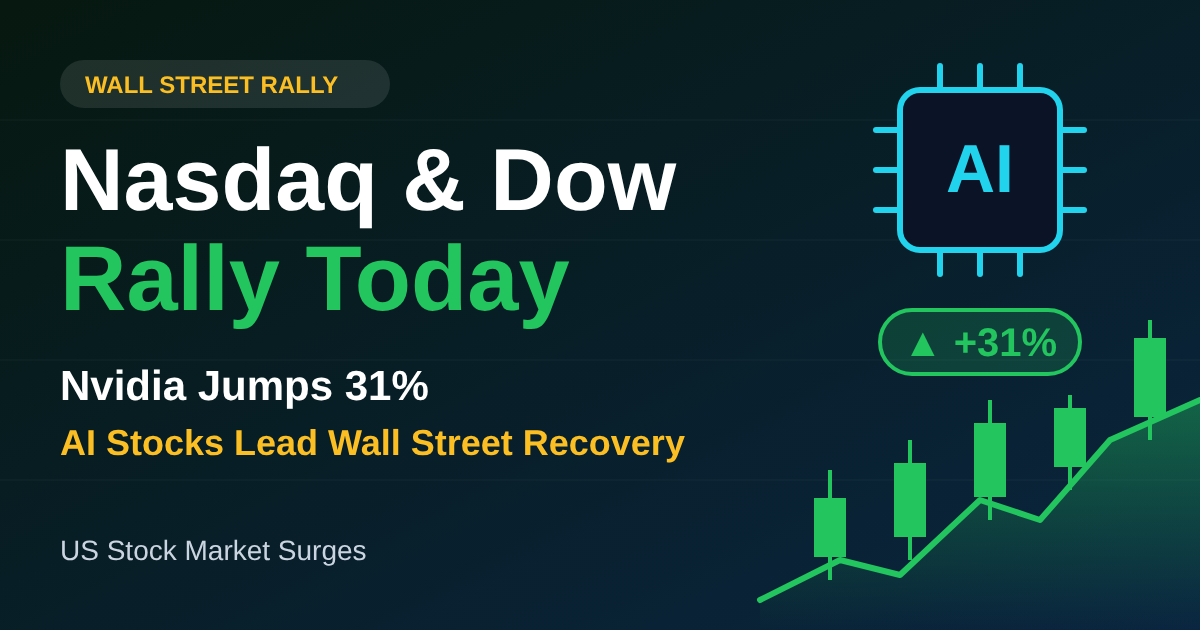
Nasdaq and Dow Jones Rally Today: US Stock Market Surges as Nvidia Jumps 31%, AI Stocks Lead Wall Street Recovery
The US stock market witnessed a powerful recovery on Monday, November 23, 2026, as investors returned to technology and artificial intelligence (AI) stocks following a sharp correction in the previous week. The Nasdaq Composite, Dow Jones Industrial Average and S&P 500 all recorded substantial gains, with Nvidia emerging as the biggest driver of the rally.
5 min read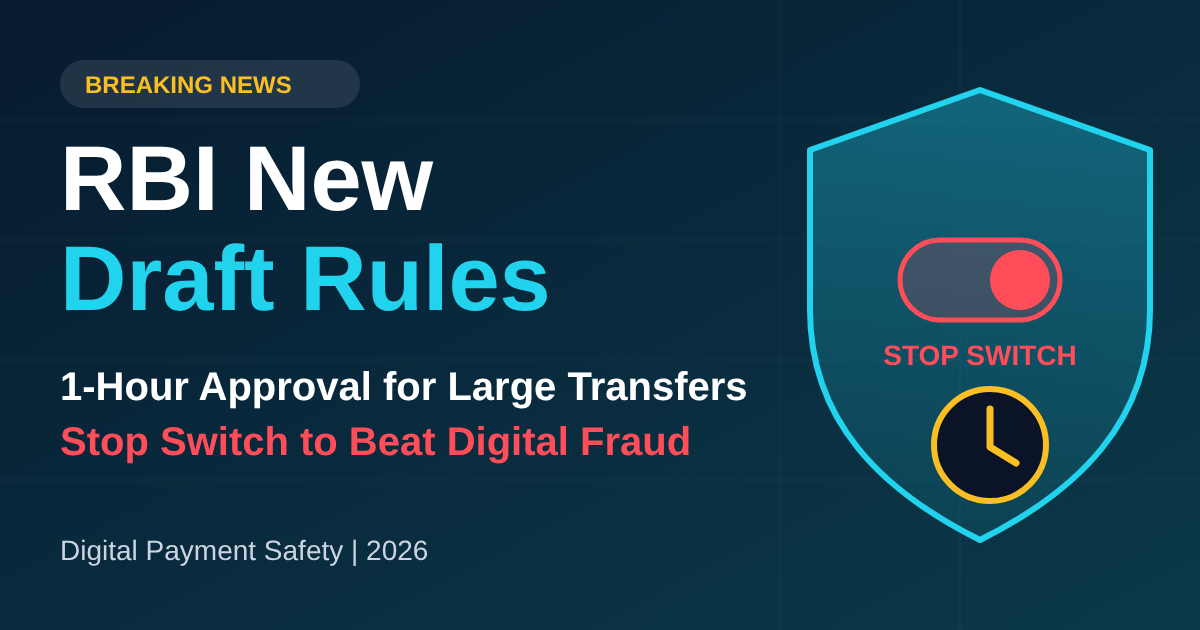
RBI New Draft Rules 2026: One-Hour Approval for Large Money Transfers, Stop Switch to Prevent Digital Payment Fraud
The Reserve Bank of India (RBI) has proposed a new set of safeguards to strengthen digital banking security and protect customers against increasing cases of online payment fraud. The proposed framework introduces additional approval requirements for selected high-value bank transfers, an emergency payment-blocking facility and greater control over digital transactions.
5 min read
Gold Rate Today, November 24, 2026: 22K and 24K Gold Prices Rise in Delhi; Check Latest Rates Per 10 Grams
Gold prices in India witnessed an increase on Tuesday, November 24, 2026, bringing fresh attention to the domestic bullion market. Buyers planning to purchase gold jewellery, coins or investment-related products are closely tracking the latest price movements as fluctuations continue in the precious metals market.
5 min read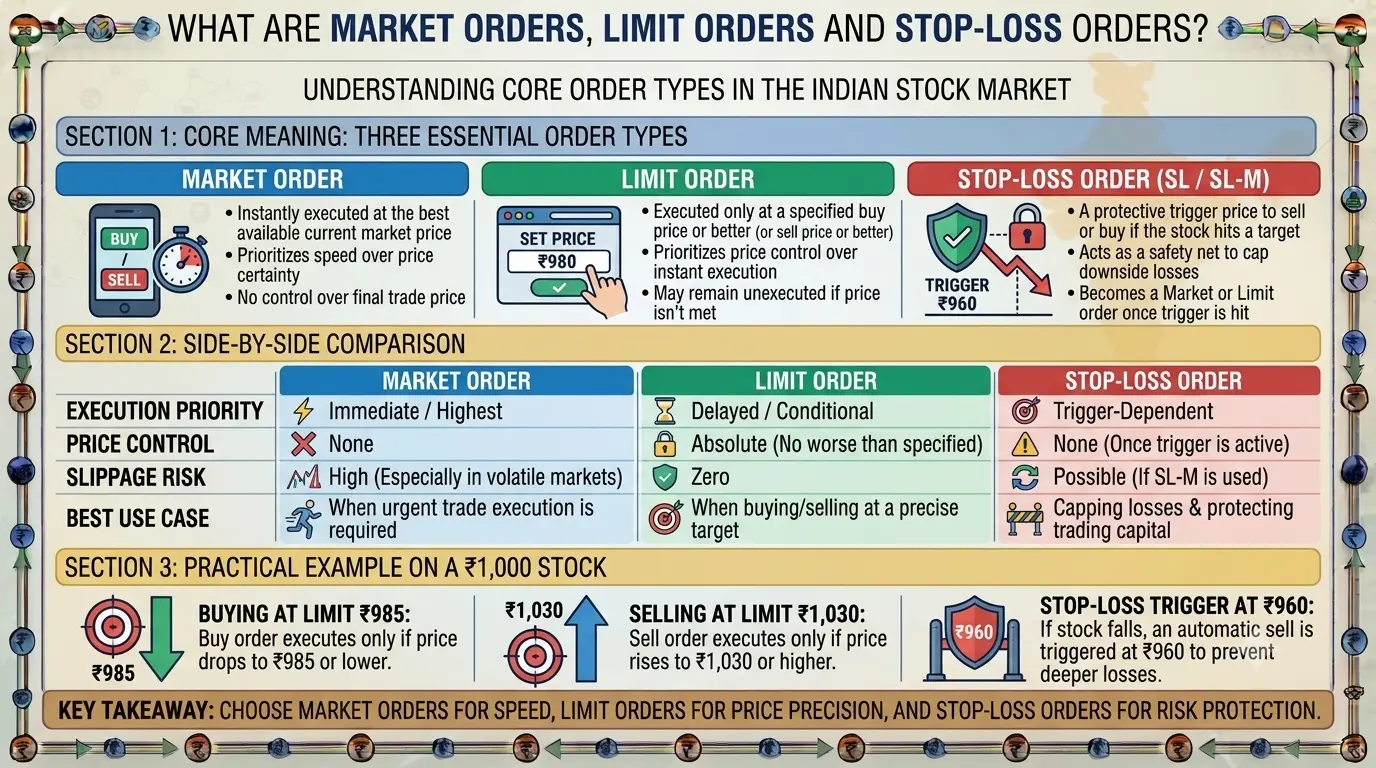
What Are Market Orders, Limit Orders and Stop-Loss Orders?
Understand how market, limit and stop-loss orders work in the Indian stock market, how they differ, and what beginners should know before placing a trade.
10 min readAbout Share Market
Share Market – Latest News, Updates and Market Trends
The share market is an important part of the financial world. Every day, thousands of companies, investors and traders take part in buying and selling shares. Market prices keep changing, and even a small development can affect how investors look at a particular stock.
TradeSensi brings you the latest share market news, updates and important developments from the Indian stock market. From daily market movements to company-related news, readers can follow the stories that matter to investors and traders.
Here, you can explore updates on BSE and NSE, changes in share prices, company performance, market trends, major stock movements and other developments that influence the market. You can also stay informed about Sensex, Nifty and the factors that affect investor sentiment.
Whether you follow the market every day or simply want to know why a particular share is moving, our share market coverage helps you understand what is happening and why it matters.
We aim to present financial news in simple language so readers can follow market developments without getting lost in complicated terms.
Stay connected with TradeSensi for share market news, company updates and important stock market developments.
Frequently Asked Questions About the Share Market
1. What is the share market?
The share market is where investors buy and sell shares of listed companies. When someone buys a share, they own a small part of that company. Share prices change based on demand, supply, company performance and market conditions.
2. How does the Indian share market work?
The Indian share market mainly operates through two major exchanges, the Bombay Stock Exchange (BSE) and the National Stock Exchange (NSE). Investors place buy and sell orders through registered stockbrokers, and trades are matched electronically.
3. What are the main stock exchanges in India?
India has two major stock exchanges: BSE and NSE. BSE is known for the Sensex index, while NSE is known for the Nifty 50 index. Both provide a platform for trading listed securities.
4. What is the difference between Sensex and Nifty?
Sensex tracks 30 major companies listed on BSE, while Nifty 50 tracks 50 major companies listed on NSE. Both indices are widely followed to understand the overall direction of the Indian share market.
5. Why does the share market rise and fall?
The market moves because of several factors, such as company results, economic data, interest rates, global events, government decisions and investor sentiment. Changes in buying and selling activity also affect share prices.
6. What time does the Indian share market open and close?
The regular equity market trading session on NSE and BSE generally runs from 9:15 AM to 3:30 PM, Monday to Friday, excluding exchange holidays.
7. Why do share prices change every day?
Share prices change when buyers and sellers react to new information. Company announcements, quarterly results, business developments and changes in market sentiment can all influence the price of a stock.
8. What is the difference between NSE and BSE?
NSE stands for National Stock Exchange of India, while BSE stands for BSE Limited, formerly known as Bombay Stock Exchange. Both are recognised stock exchanges where investors can trade listed securities.
9. What is a bull market?
A bull market is a period when stock prices generally move higher and investor confidence is strong. During such periods, buying interest is often higher across different parts of the market.
10. What is a bear market?
A bear market refers to a period of sustained weakness in stock prices. Investors may become cautious because of economic uncertainty, weak company results or other negative developments.
11. Can I buy shares directly from NSE or BSE?
Individual investors generally place orders through a registered stockbroker. The broker provides the trading platform that connects investors to the stock exchange.
12. What affects the Indian share market the most?
The Indian share market can be influenced by company earnings, inflation, interest rates, government policies, foreign investment, crude oil prices, global market movements and economic conditions.
13. What is market capitalisation?
Market capitalisation is the total market value of a company's outstanding shares. It is calculated by multiplying the current share price by the total number of outstanding shares.
14. What are FII and DII in the share market?
FII refers to Foreign Institutional Investors, while DII refers to Domestic Institutional Investors. Their buying and selling activity is closely followed because it can influence market sentiment and liquidity.
15. Where can I get the latest Indian share market news?
You can follow financial news platforms, stock exchange announcements and company disclosures. TradeSensi also covers Indian share market news, company updates, stock movements and important market developments.
Market information is provided for educational and informational purposes. Always do your own research before making investment decisions.